
Welcome To Raigad
Raigad District is one of the most historically significant and culturally rich regions in the state of Maharashtra. Known for its scenic coastline, majestic forts, and growing urban development, the district holds an important place in the state’s cultural heritage and economic progress.
Named after the iconic Raigad Fort, the district is renowned for its natural beauty, lush green landscapes, rivers, and proximity to the Arabian Sea. Alibaug, the district headquarters, is a popular coastal town well known for its beaches, tourism activities, and connectivity to Mumbai. The district also benefits from its close association with the Mumbai Metropolitan Region, supporting industrial growth and infrastructure development.
Raigad District is deeply rooted in history and tradition, famously associated with Chhatrapati Shivaji Maharaj and the Maratha Empire. The historic Raigad Fort, once the capital of the Maratha Kingdom, stands as a symbol of pride and valor. The district is home to several important religious, historical, and tourist attractions, including Alibaug Beach, Murud-Janjira Fort, Harihareshwar Temple, and Karnala Fort.
With a strong foundation in agriculture, fishing, tourism, and industrial development, along with rapid urbanization and improved connectivity, Raigad District represents a unique blend of historical legacy, cultural richness, and modern growth.
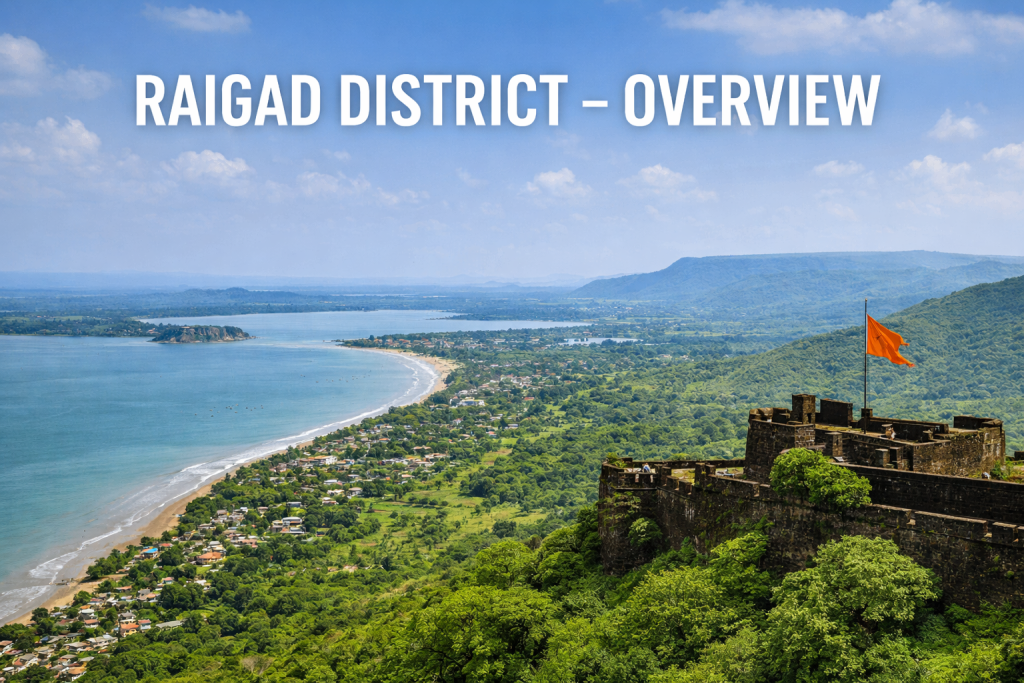
Raigad—–Over View
Raigad District is one of the most culturally rich and economically important regions of Maharashtra. Located along the Konkan coast, the district is named after the historic Raigad Fort, which stands as a symbol of its glorious past. The region is blessed with scenic landscapes, fertile land, rivers, and a long coastline that supports agriculture, fishing, and rural livelihoods.
Home to prominent towns such as Alibaug and Panvel, Raigad District combines growing urban infrastructure with strong historical and cultural roots. With iconic landmarks like Raigad Fort, Murud–Janjira Fort, Alibaug Beach, Harihareshwar Temple, and Karnala Bird Sanctuary, the district represents a perfect blend of heritage, tourism, spirituality, and modern development.
Geography & Location
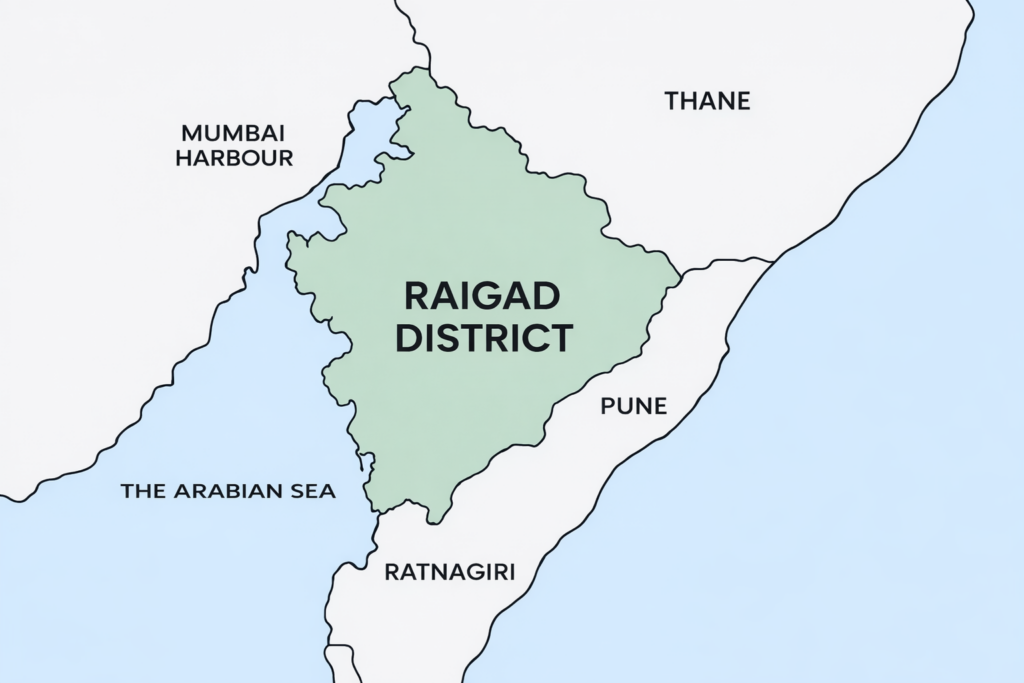
Raigad District lies in the Konkan region of Maharashtra and is bordered by:
- Mumbai Harbour to the northwest
- Thane District to the north
- Pune District to the east
- Ratnagiri District to the south
- The Arabian Sea to the west
The district features a diverse landscape of coastline, hills, plateaus, and valleys, with much of the eastern region merging into the Sahyadri (Western Ghats) mountain range. Its strategic coastal location and strong road and rail connectivity make Raigad an important and easily accessible district in Maharashtra.
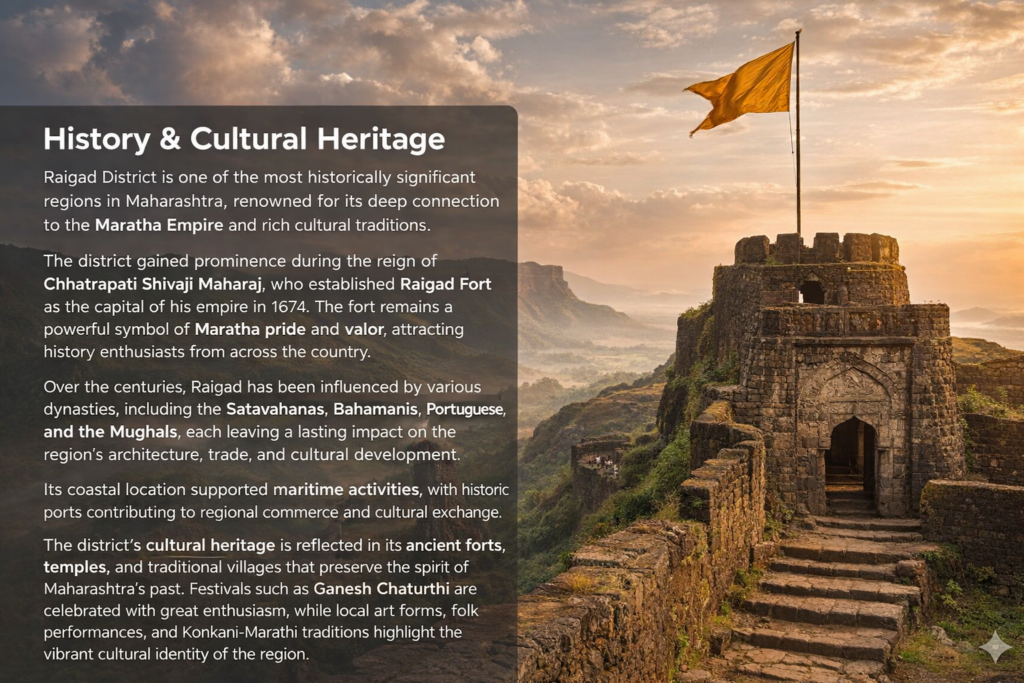
History & Cultural Heritage
Raigad District is one of the most historically significant regions in Maharashtra, renowned for its deep connection to the Maratha Empire and rich cultural traditions. The district gained prominence during the reign of Chhatrapati Shivaji Maharaj, who established Raigad Fort as the capital of his empire in 1674. The fort remains a powerful symbol of Maratha pride and valor, attracting history enthusiasts from across the country.
Over the centuries, Raigad has been influenced by various dynasties, including the Satavahanas, Bahamanis, Portuguese, and the Mughals, each leaving a lasting impact on the region’s architecture, trade, and cultural development. Its coastal location supported maritime activities, with historic ports contributing to regional commerce and cultural exchange.
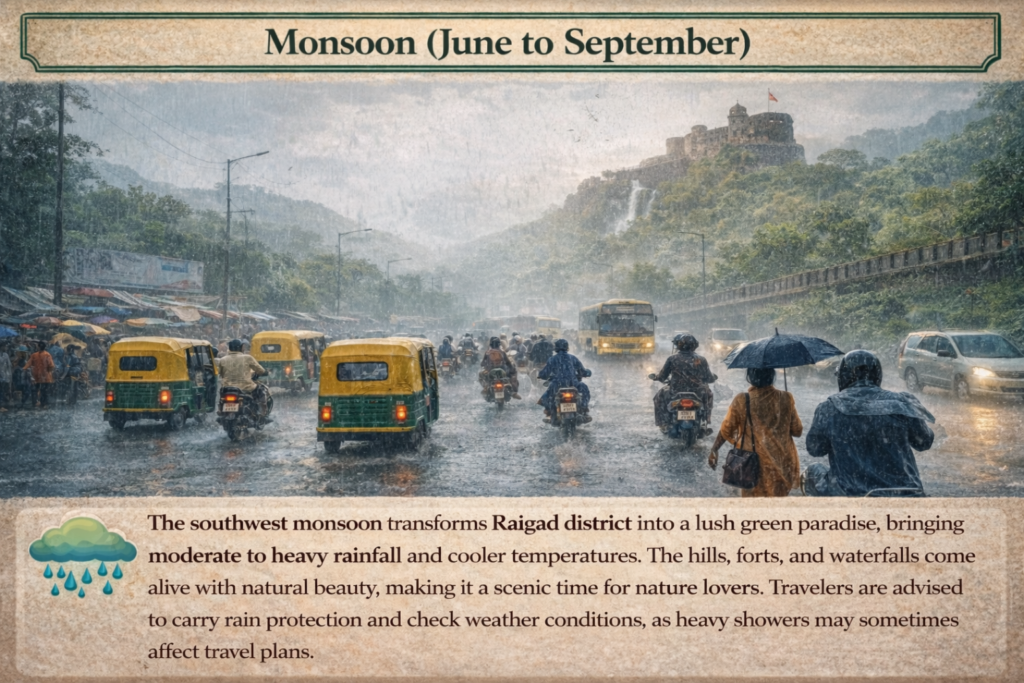
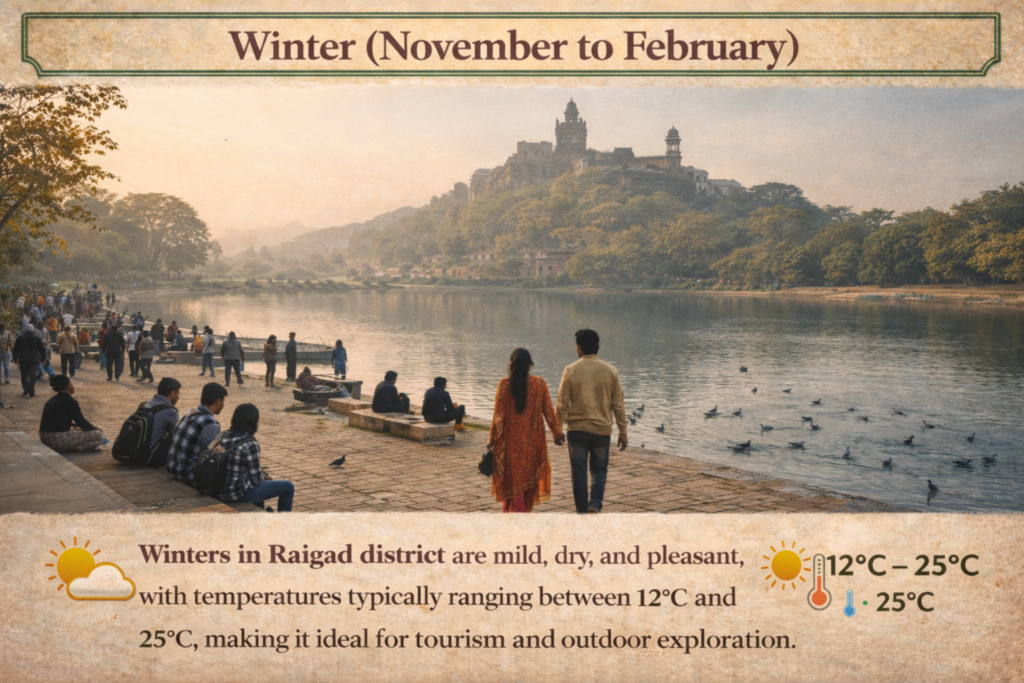
Climate of raigad

Foundations Majestic Heritage
Frequently Asked Questions
Raigad District is known for its historic forts, scenic coastline, cultural heritage, and growing urban development
The district is closely associated with Chhatrapati Shivaji Maharaj, and Raigad Fort once served as the capital of the Maratha Empire
Major attractions include Raigad Fort, Alibaug Beach, Murud-Janjira Fort, Harihareshwar Temple, and Karnala Fort
The district has strong foundations in agriculture, fishing, tourism, and industrial development, along with improving infrastructure and connectivity